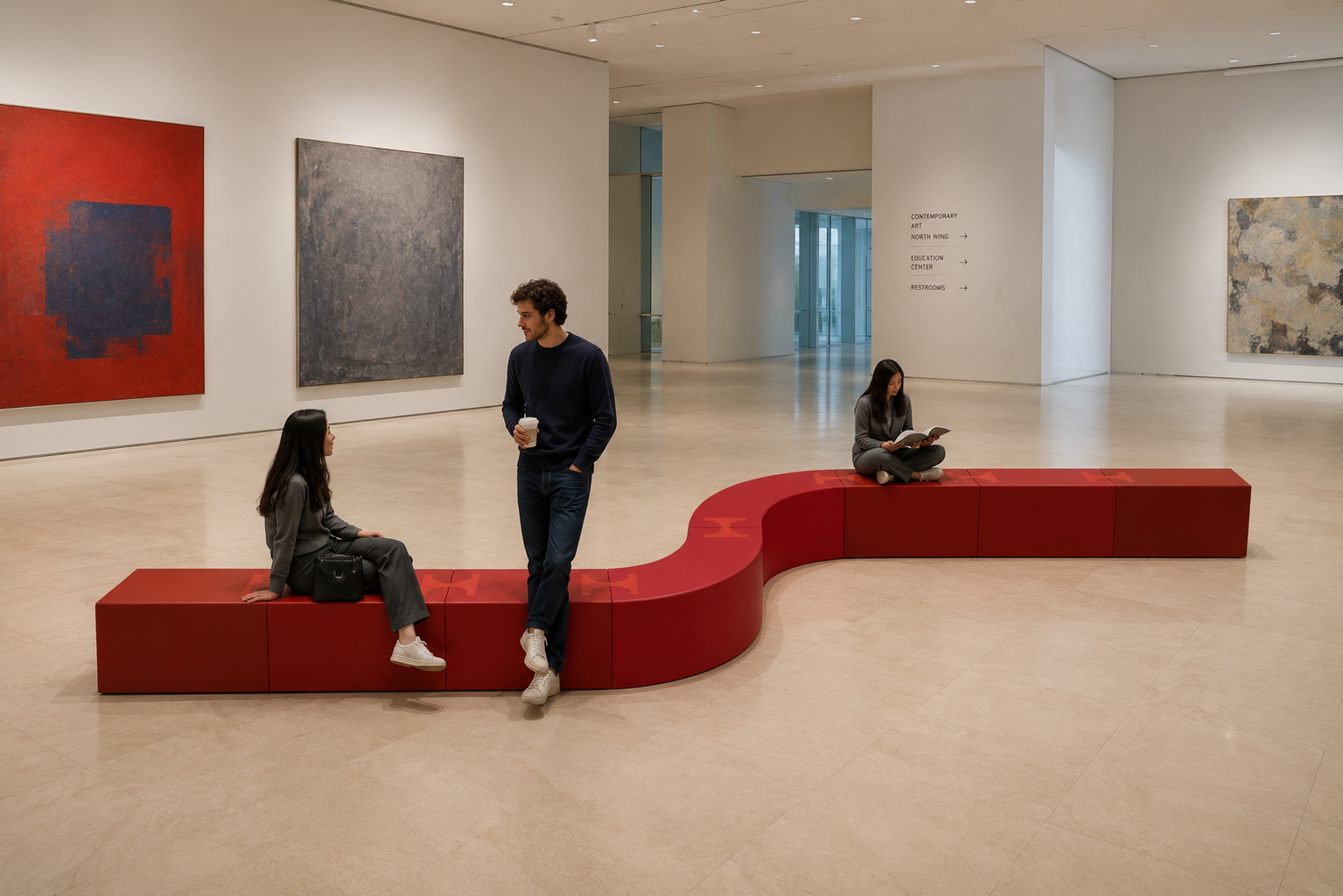
Loki is named after the Norse god of shape-shifting.
It felt right. Not because we were thinking about mythology when we designed it, but because the name arrived after the design did and described it more accurately than anything else we had considered. Loki changes. It is not one thing. It is whatever the space needs it to be on a given day, in a given configuration, for a given number of people.
We are architects. We think about spaces before we think about objects. And the question that drove Loki from the beginning was not what should a bench look like but what should a bench be able to do.
Most seating systems are fixed in their ambition.
A straight bench is a straight bench. A curved bench is a curved bench. A modular sofa can be reconfigured but only within a narrow range of possibilities that the manufacturer has anticipated and planned for. The configurations are predetermined. The user chooses from a menu.
We find this unsatisfying. Not because menus are wrong, but because the spaces that seating inhabits are not fixed. A library reading room is used differently on a Tuesday afternoon than on a Saturday morning. A corporate lobby serves arriving visitors, waiting clients, and impromptu conversations between colleagues — often simultaneously. A children's museum needs seating that works for a four-year-old and a forty-year-old in the same moment.
The spaces are dynamic. The seating should be too.
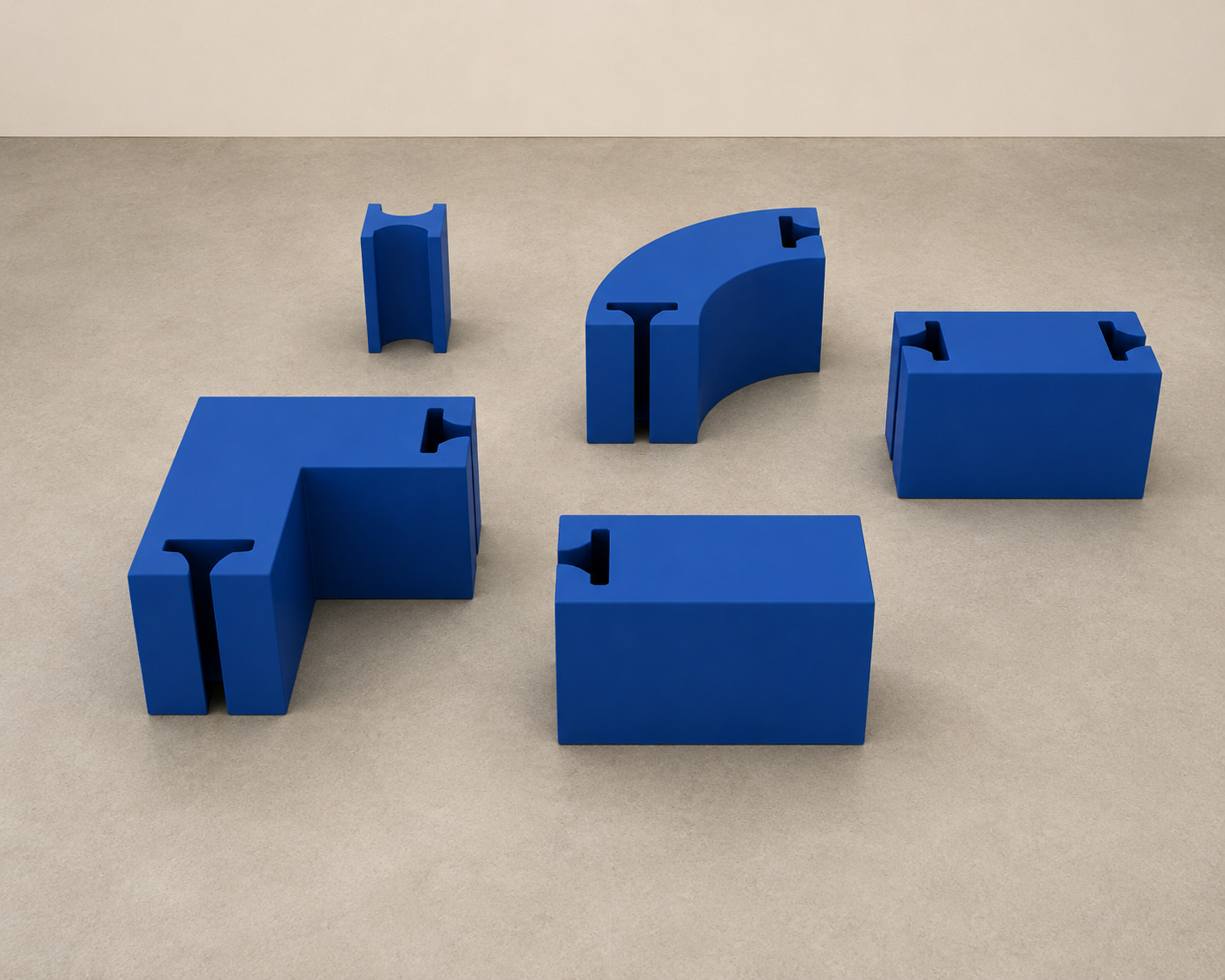
Loki is built from five modules.
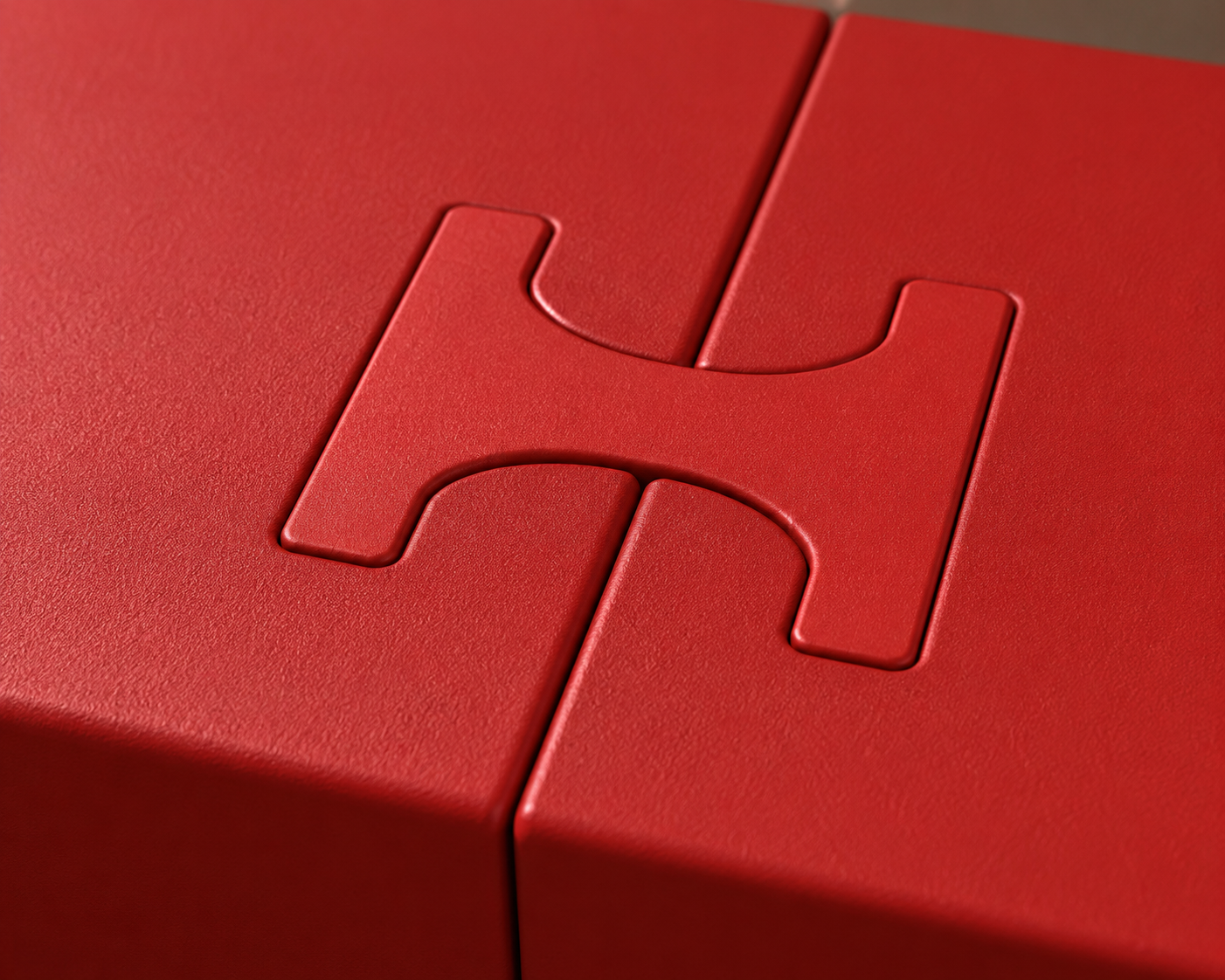
The straight module is the foundation — a clean rectangular block that forms the linear runs of any configuration. The curved module introduces the possibility of turning — a quarter circle that redirects the bench smoothly, without corners, without interruption. The corner module creates a sharp ninety-degree turn for configurations where angularity is the point. The end module caps any run cleanly, giving the bench a resolved terminus rather than an unfinished edge. The connector module is the intelligence of the system — a precisely engineered joint that locks any two modules together securely, invisibly, without tools.
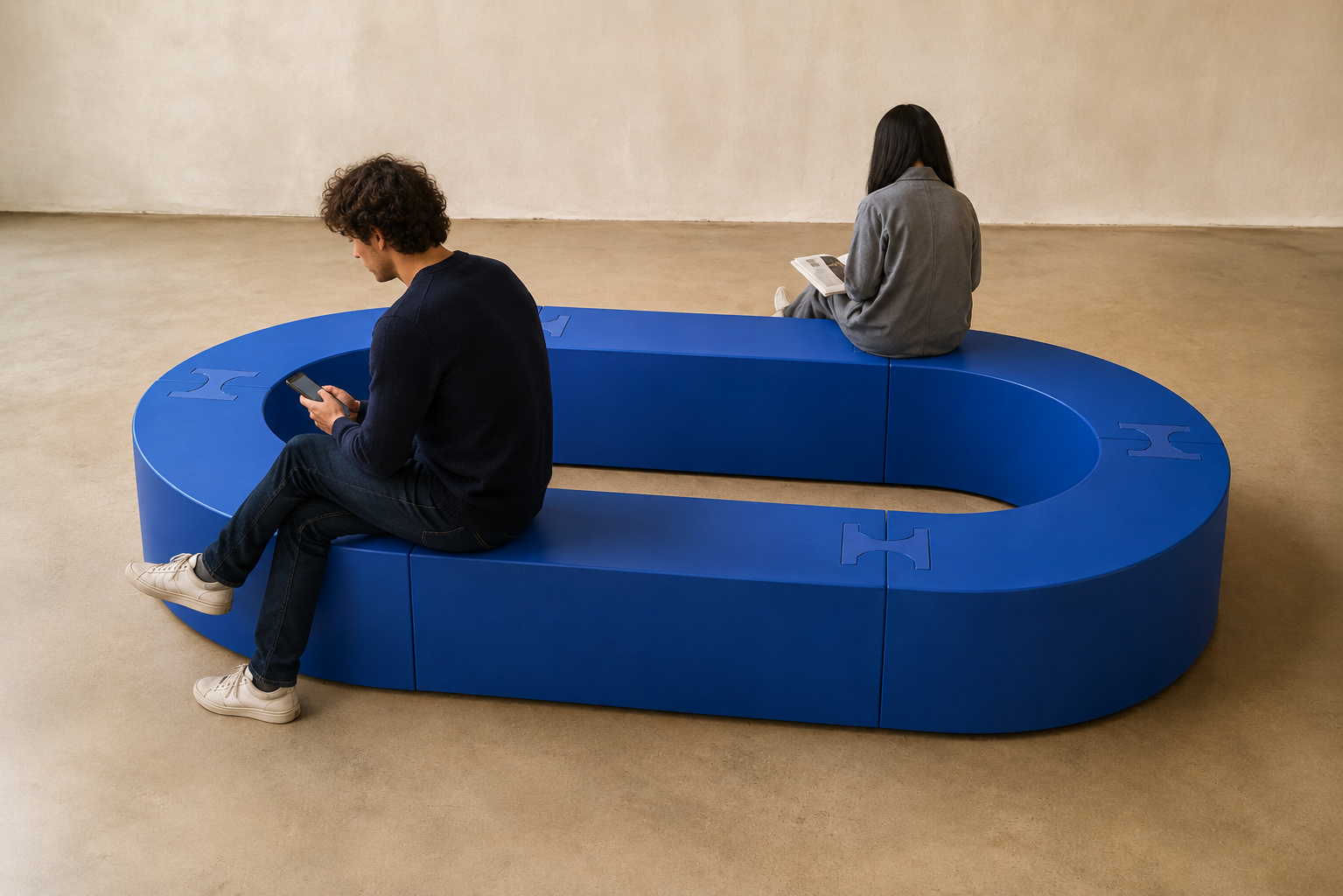
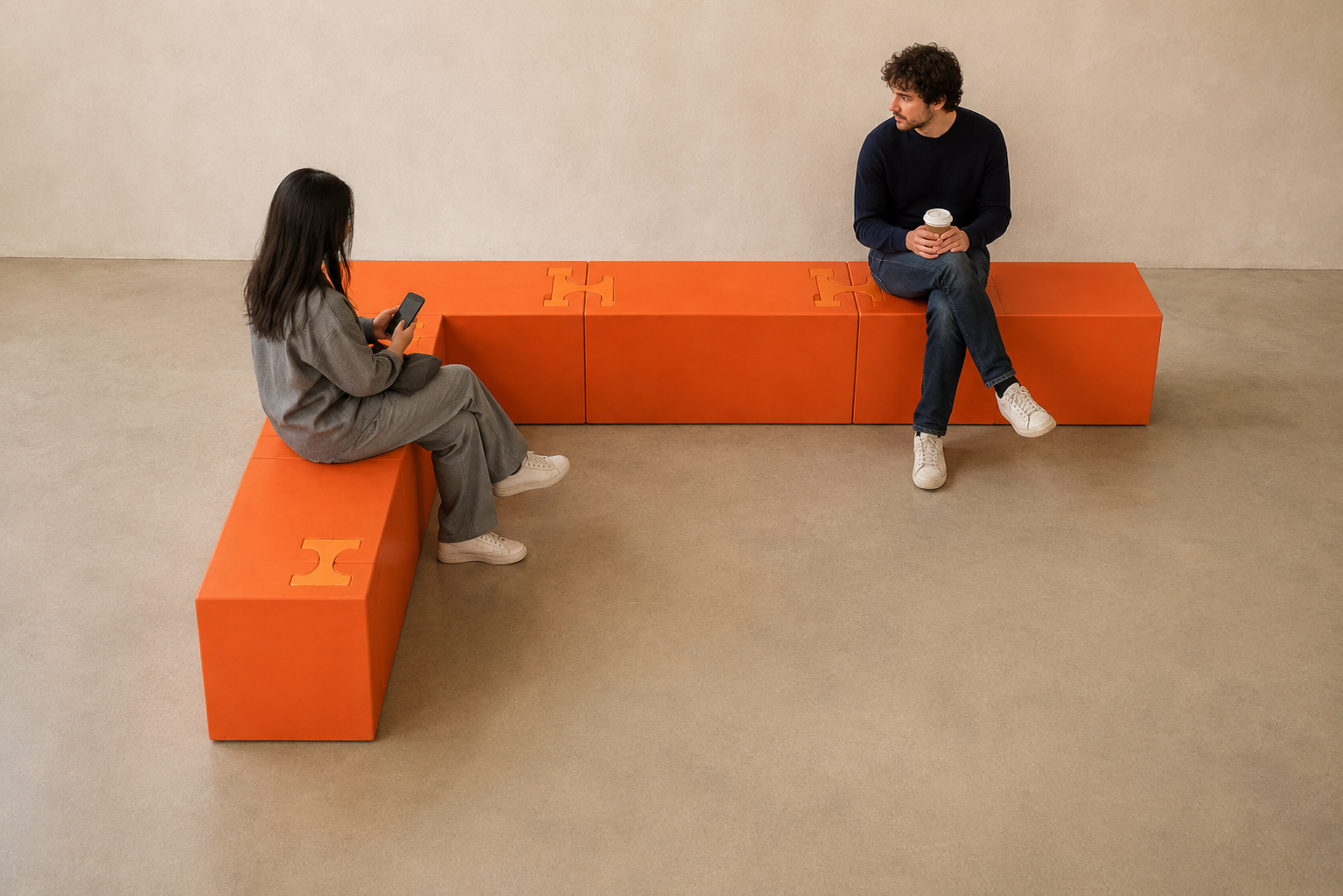
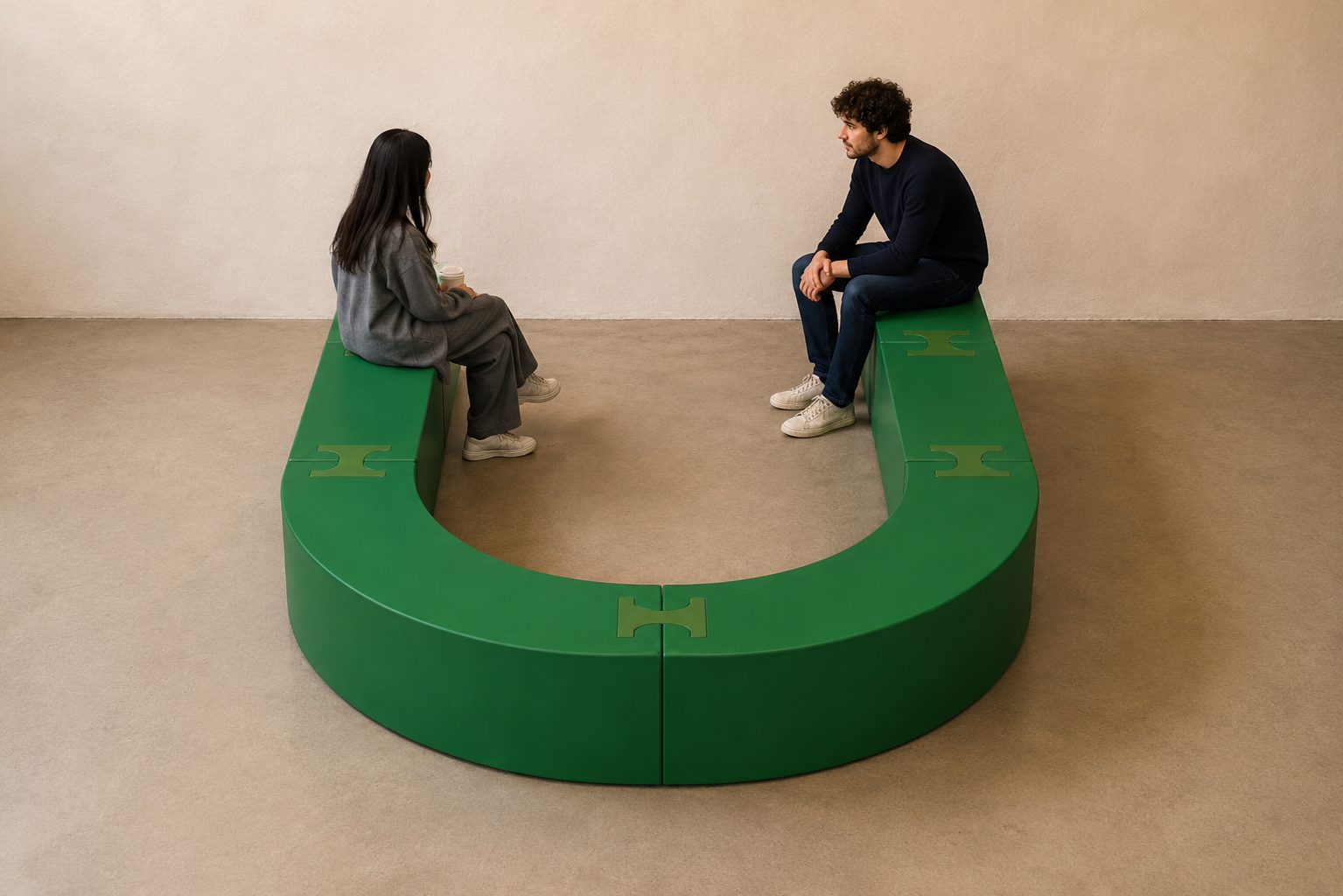
Together these five modules can produce a straight bench of any length, an L-shape, a U-shape, a horseshoe, a full circle, an island, a labyrinth. Configurations we have not thought of yet. Configurations that will be discovered by the people who install Loki in spaces we have never visited.
This is the thing about a genuinely open system — it exceeds its designers. The person who specifies Loki for a particular space will understand that space better than we do, and their configuration will be the right one. We designed the grammar. The sentences are theirs.
The connector module is the part of Loki we are most proud of and the part that is least visible.
When Loki is assembled, the connector sits between any two modules, locking them together with a precision that makes the joint feel monolithic. Run your hand along the top surface of an assembled Loki bench and you feel the seam only if you are looking for it. The connection is mechanical but it reads as structural — as though the modules were always one thing and are simply revealing their segmented nature to those who look closely.
Getting the connector right took longer than getting any of the five modules right. The modules are essentially resolved by their geometry — a straight block, a curved quarter circle, a ninety-degree corner. The connector had to do something more specific. It had to make the joint disappear while remaining strong enough to withstand the lateral forces that a public seating installation will experience over years of use. It had to be installable without specialist tools. And it had to be demountable — because Loki is designed to be reconfigured, not just installed once and left.
A connector that cannot be released without damage is not a connector for a modular system. It is a fastener for a permanent one.
Loki arrives in bold solid colours. Not neutrals, not near-whites, not the carefully inoffensive palette of most public seating.
This was a deliberate position. Public seating is almost universally beige, grey, or black — colours chosen not because they are right for the space but because they are unlikely to be wrong for any space. The logic is defensive. We understand it. We disagree with it.
Colour in a public space does something that neutral cannot. It signals that the space was designed by someone who made a decision rather than avoided one. It gives children a landmark — the red bench, the green bench — that adults forget matters enormously to the way young people navigate and inhabit space. It creates a relationship between the seating and the architecture around it that a neutral object never achieves.
We specify Loki in bold — deep red, forest green, cobalt blue, warm mustard, charcoal. Single colours per installation, consistent across every module in the configuration. The colour is the identity of that particular Loki in that particular space. Change the configuration and you change the form. Keep the colour and you keep the continuity.
Loki was designed for public and semi-public spaces. Not exclusively — it works in private homes, in large living rooms, in gardens — but its natural habitat is the spaces that belong to many people at once.
Airport departure lounges where passengers need to sit for unpredictable lengths of time in unpredictable numbers. Library reading rooms where quiet and proximity coexist. Corporate lobbies where the seating needs to absorb everything from a lone visitor checking their phone to a group of six having a standing meeting that became a sitting one. Children's museums and play spaces where the bench is simultaneously seating for parents and a landscape for children. Hotel lobbies. University common rooms. Healthcare waiting areas where the quality of the seating communicates something about the quality of the care.
These are spaces that take seating seriously and are underserved by what the market typically offers them. Loki was designed for the person specifying seating for these spaces who wants something that will perform exceptionally over years of heavy use, adapt as the space's needs change, and look like a decision was made.
Public seating fails in predictable ways. Upholstery tears, stains, and requires replacement. Legs wobble when the floor fixings work loose. Joints fail under the lateral loads that users apply — leaning, pushing, climbing, sitting on the armrest. Colour fades under UV exposure or cleaning chemicals.
Loki is designed to avoid these failure modes.
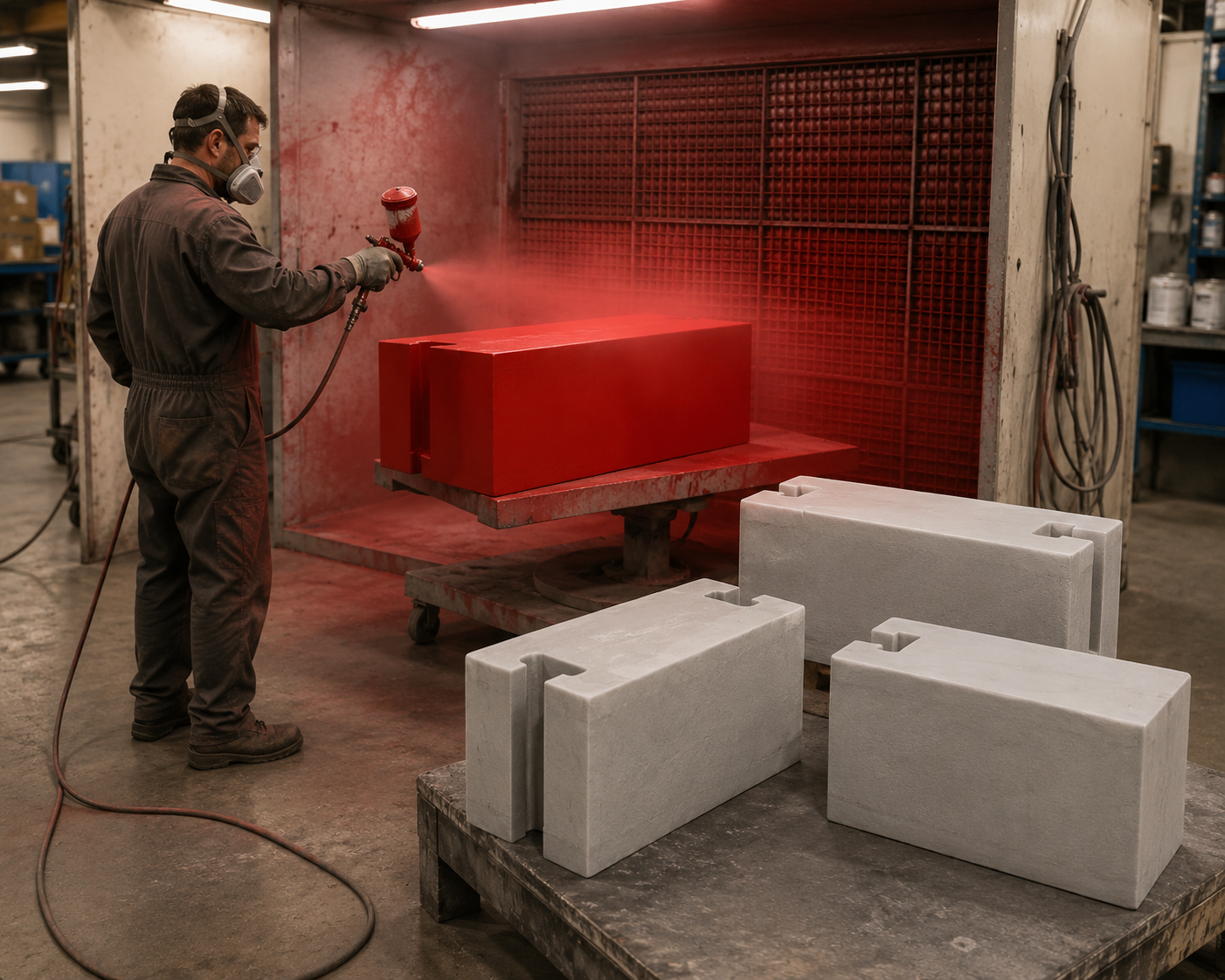
The modules are solid — no upholstery, no loose components, no mechanical parts that can work loose with use. The connector is engineered to handle lateral loads far in excess of what normal seating use produces. The colour is a durable powder-coat finish applied to the substrate and cured at high temperature, resistant to UV, cleaning chemicals, and the ordinary abrasions of public use. The top surface is sealed against moisture.
We designed Loki to be in service for a decade without requiring anything beyond occasional cleaning. That is not an aspiration. It is a specification requirement we held ourselves to through the design process.
The most underappreciated thing about Loki is that it can be reconfigured after installation.
Most modular seating systems are modular in the showroom and permanent in the building. The flexibility exists on paper, in the sales conversation, in the specification document. In practice, once the seating is installed it stays where it is put because reconfiguration requires tools, time, and expertise that the building's facilities team does not have.
Loki's connector is designed to be released and refastened by one person with no specialist tools in under a minute per joint. A configuration that serves a library reading room on Monday can serve a lecture overflow on Wednesday and a children's workshop on Saturday. The same modules, the same colour, a different form.
This is not a minor feature. For the spaces Loki is designed for — spaces that are used intensively and variably — reconfigurability is the difference between seating that serves the space and seating that constrains it.
We said Loki was designed for public spaces. That is true. But several of the configurations we find most beautiful are domestic ones.
A horseshoe of Loki in a large living room creates a conversation island that no conventional sofa arrangement can replicate. A straight run along the length of a dining room serves as both additional seating for large gatherings and everyday storage for bags, books, and the accumulation of daily life. A curved configuration in a garden or on a terrace, in deep green against planted borders, is something that stops people when they see it.
The bold colour that reads as a statement in a public space reads as confidence in a private one. Loki in a home says the person who lives there knows what they want and is not apologising for it.
We want Loki to be in spaces where it gets used hard and holds up without complaint. We want it to be reconfigured six times in its first year as the space figures out what it actually needs. We want a child to run along the top of a horseshoe configuration in a children's museum while a parent watches from the straight run opposite, and for the bench to absorb both of those uses without registering either as an imposition.
We want the person who specified it to still feel good about the decision in ten years. Not because Loki has been fashionable throughout those ten years — it will not have been, fashion moves faster than that — but because it will still be working. Still holding its colour, still locking its joints, still configurable into whatever the space has become in the intervening decade.
That is the only measure of success for a piece of public seating. It works. It keeps working. It makes the space better for the people in it.