Bernard started as a conversation about the things we actually want to live with.
Not things we admire in a showroom and forget. Not things that photograph well and then disappear into a room. Things that earn their place every single day — that you notice differently in the morning light than you do in the evening, that feel better the longer you own them, that you would genuinely grieve if they broke.
We had been designing spaces for other people for years — thinking carefully about how a room feels, how materials age, how light moves through a space at different times of day. And somewhere in that practice we realised we had very specific opinions about objects. About what a lamp should feel like to switch on. About the proportion between a table surface and the base that holds it. About whether the material of a shade should have any relationship to the material of the base, or whether that contrast is the point.
Bernard is where those opinions became physical.
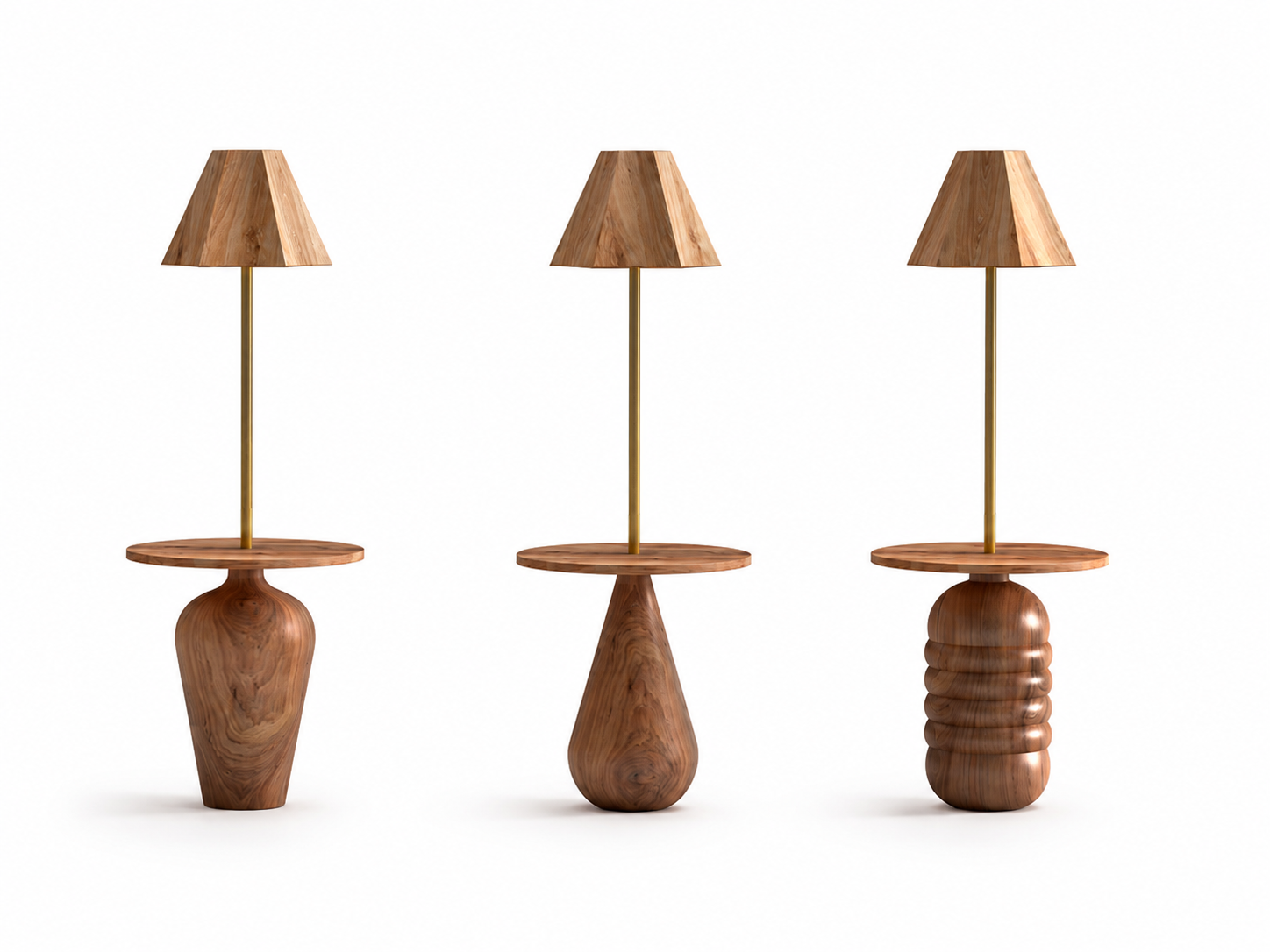
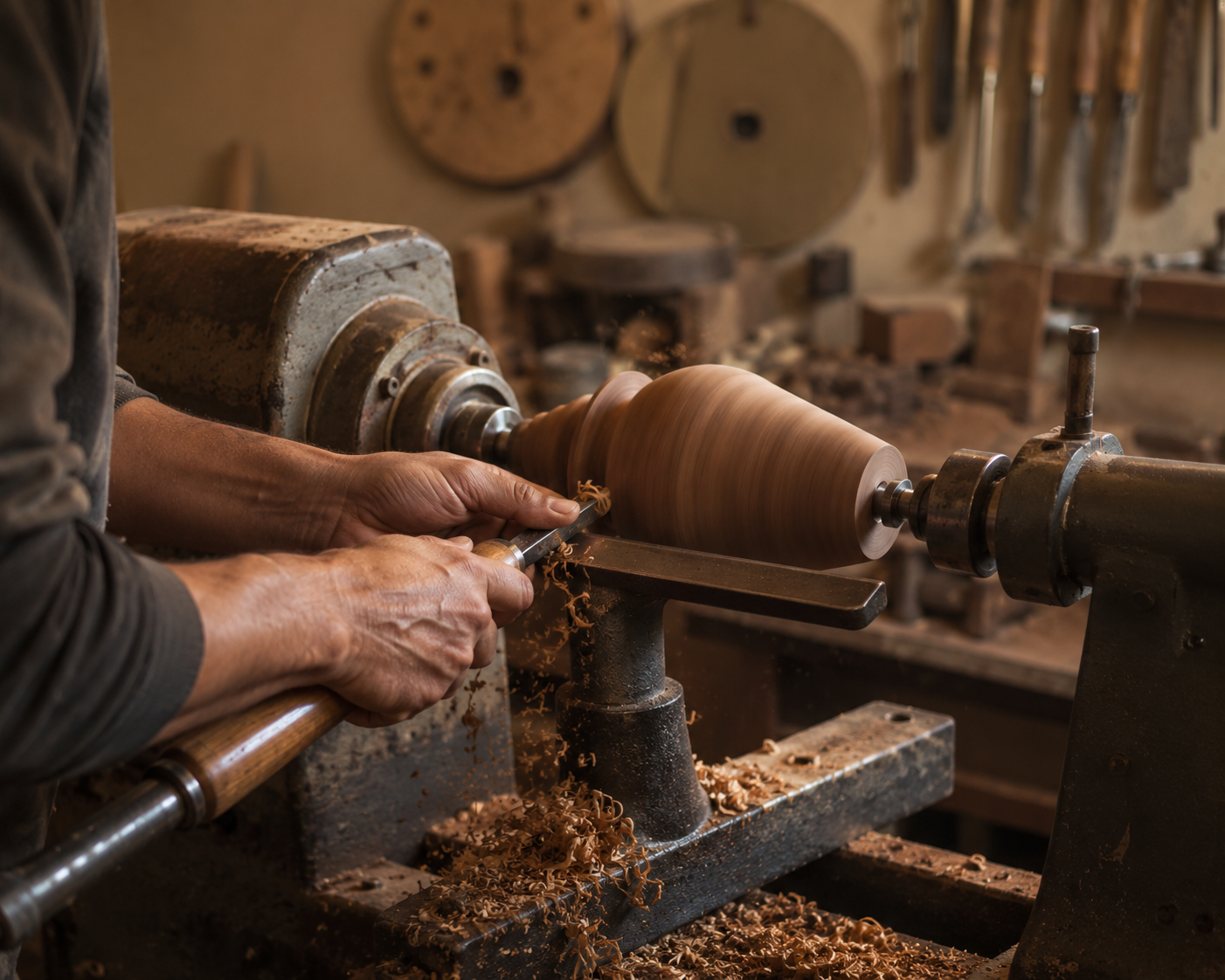
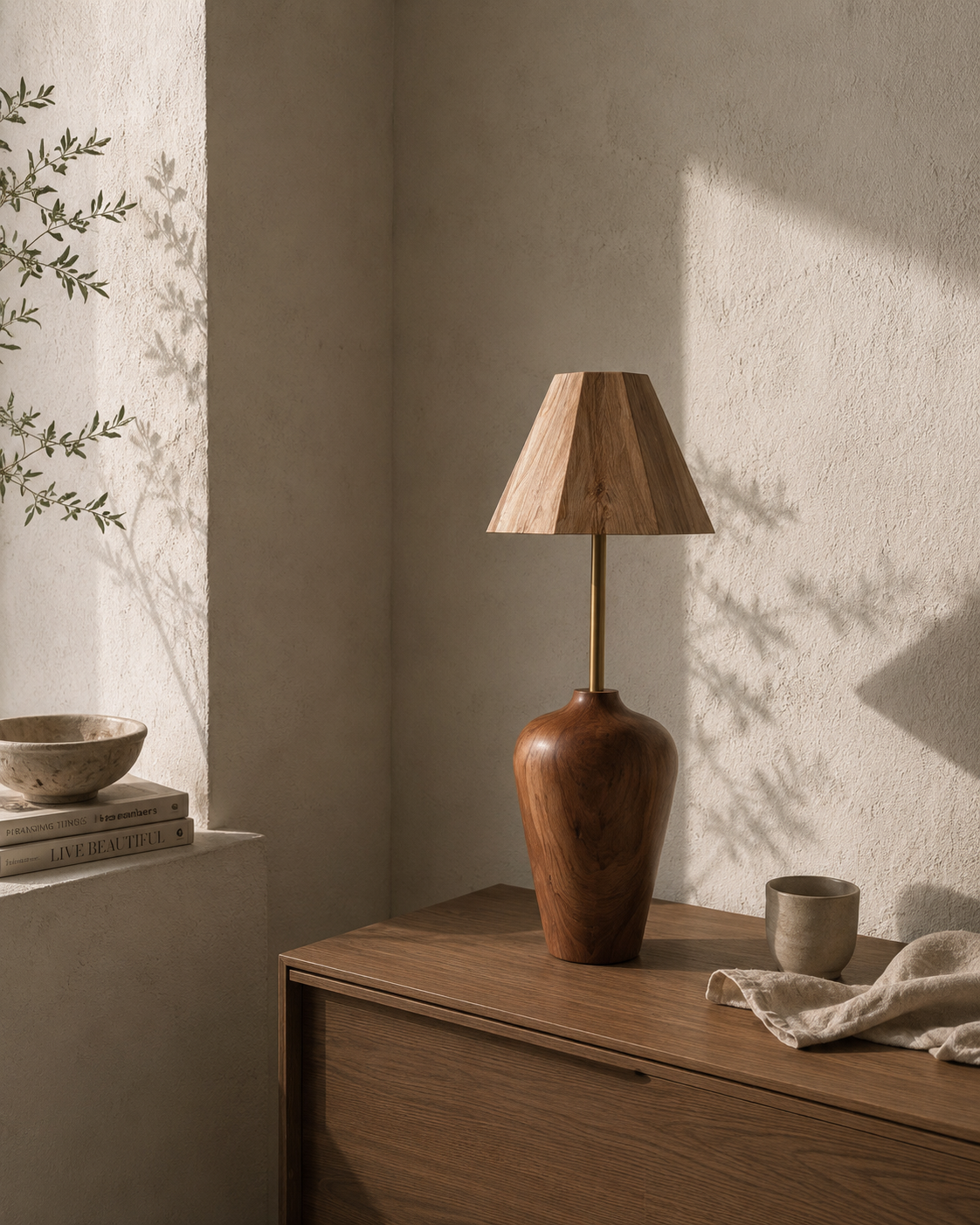
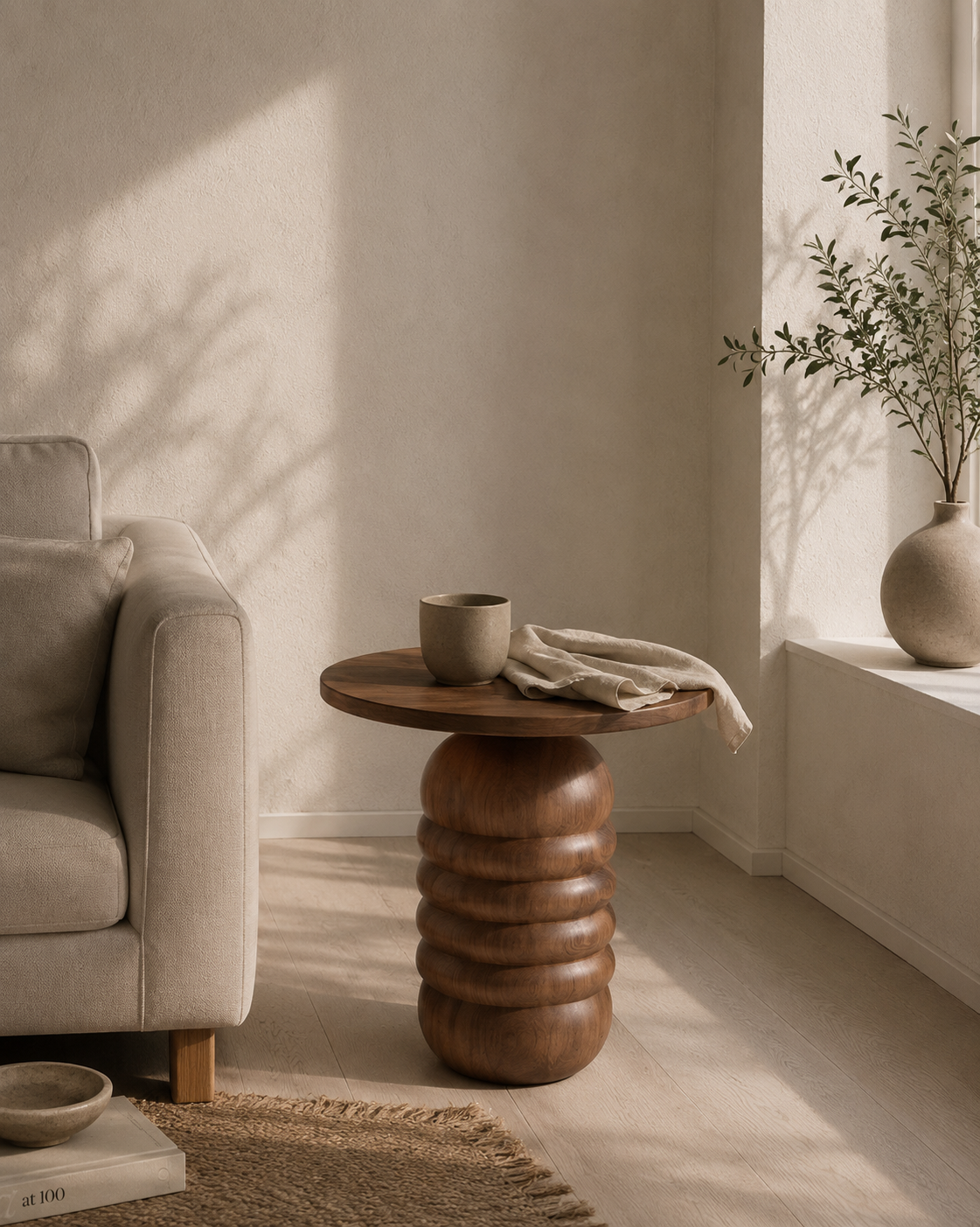
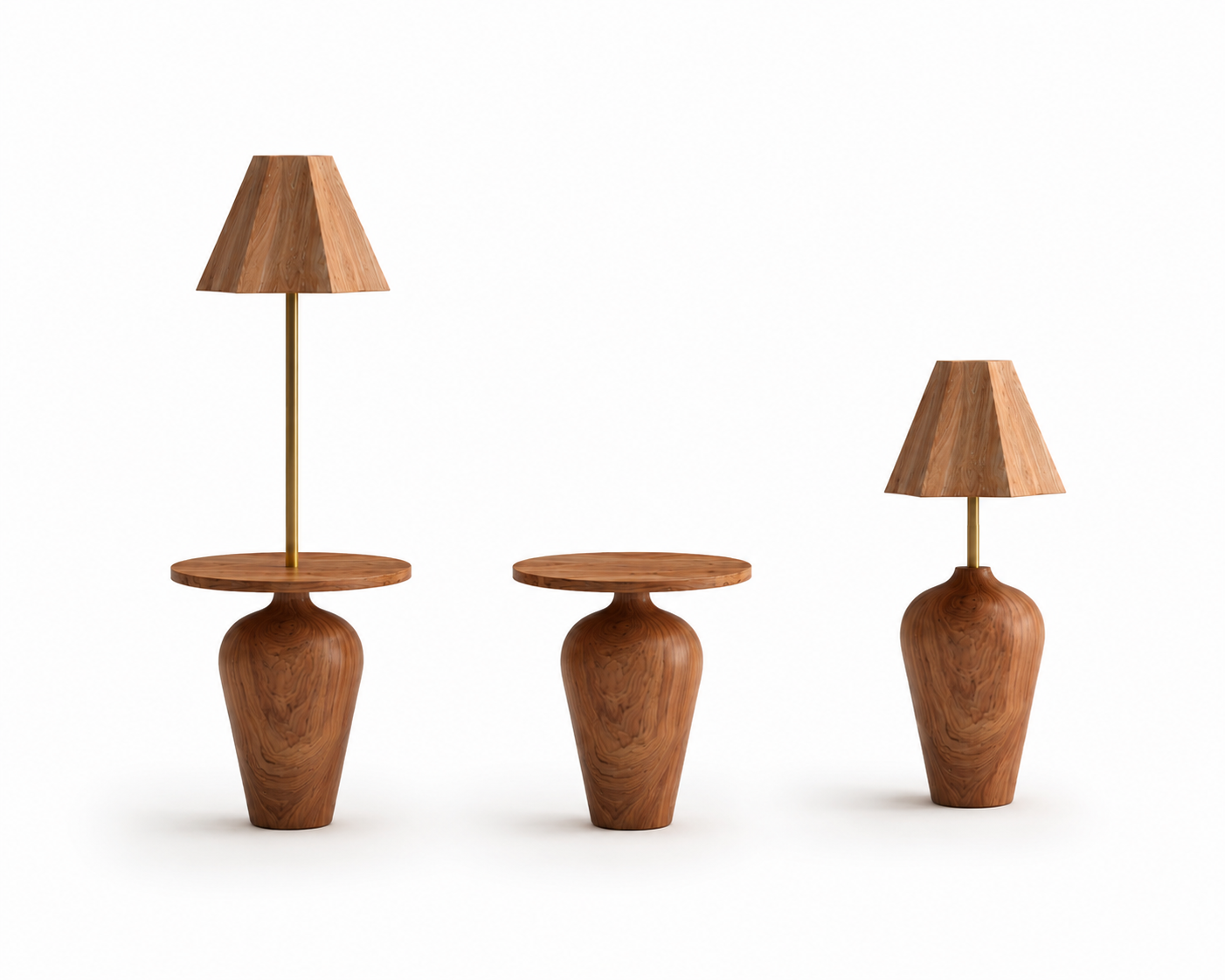
Every piece in the collection begins with one of three turned walnut bases. We call them the vase, the teardrop, and the ribbed column — though those names are ours alone, descriptive shorthand for forms that came from a longer, quieter process of looking.
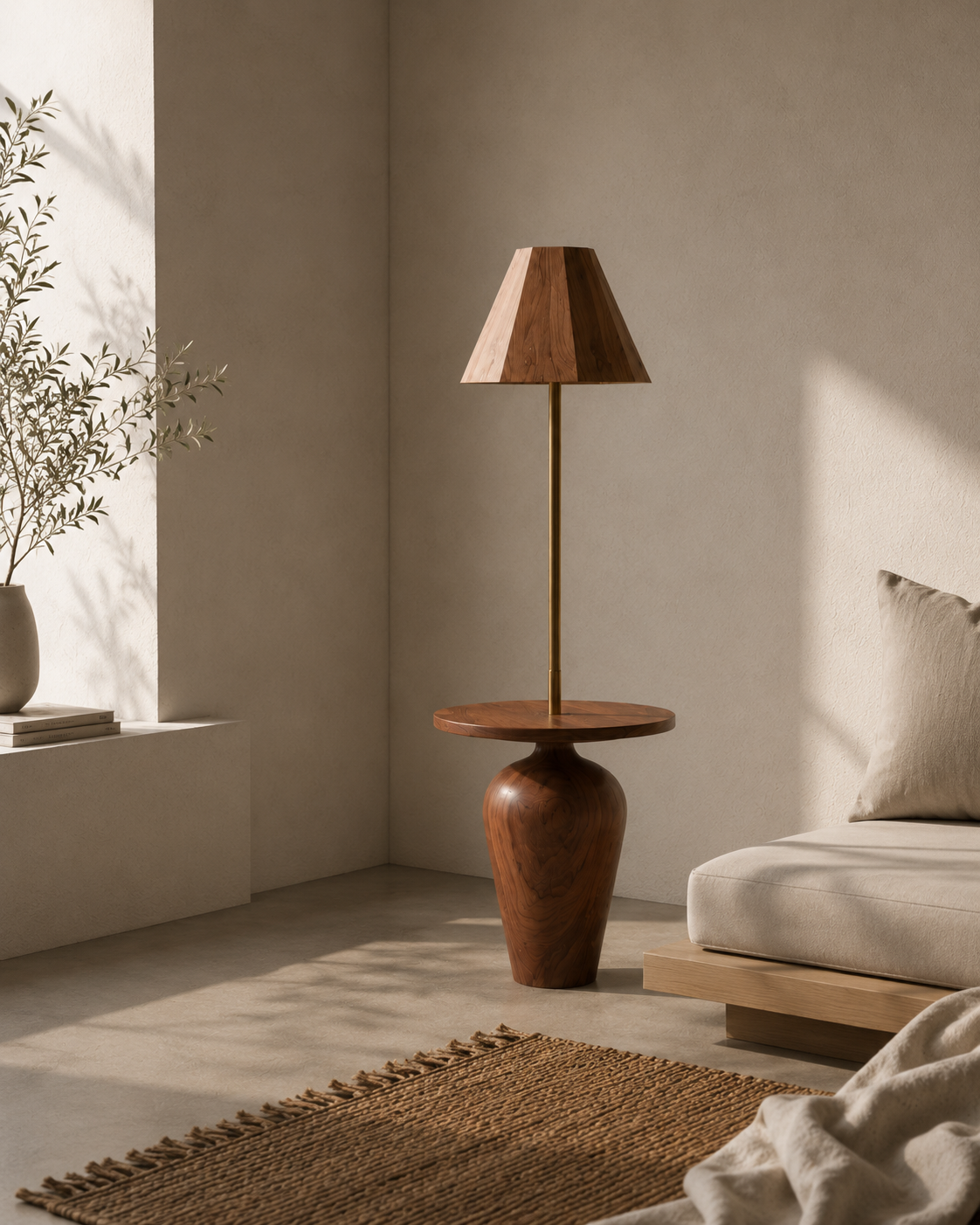
The vase is the most generous of the three. Wide at the shoulder, narrowing to a defined waist, then opening again at the foot. It carries weight and presence without heaviness. When it becomes a floor lamp it fills a corner the way a person standing there might — with warmth and quiet authority.
The teardrop is the most elemental. A single continuous curve, widest at the base, tapering without interruption to the top. No waist, no shoulder, no decision except the one decision — where does the curve begin to change? Getting that inflection point right took longer than anything else in the collection. A centimetre either way and it becomes something else entirely.
The ribbed column is the most architectural of the three. Horizontal rings stacked precisely, each one slightly smaller than the one below, creating a texture that reads differently from every angle and distance. From across a room it is a column. Up close it is a study in repetition and proportion. It was the last of the three forms to resolve itself, and the one we are most surprised by — it sits in a room with an authority we did not fully anticipate.
The decision to make the shade from the same walnut as the base was not obvious. Lamp shades carry light. Walnut does not. So there was a practical question to resolve before there was an aesthetic one.
What we discovered is that a faceted walnut shade — flat panels of wood meeting at angles, like a geometric reinterpretation of a traditional shade form — does something quite specific with light. It does not diffuse it. It concentrates it downward and outward through the open base of the shade while the wood itself glows at the edges where the grain catches the source. The result is not the soft ambient bloom of a fabric shade. It is more directed, more architectural, more like the lamp is doing something considered rather than simply being on.
And because the shade is the same material as the base, the whole object reads as a single thought rather than an assembly of parts. The brass rod — the only element that is not walnut — becomes a moment of punctuation rather than a structural interruption. Slender, precise, warm in tone. It connects without competing.
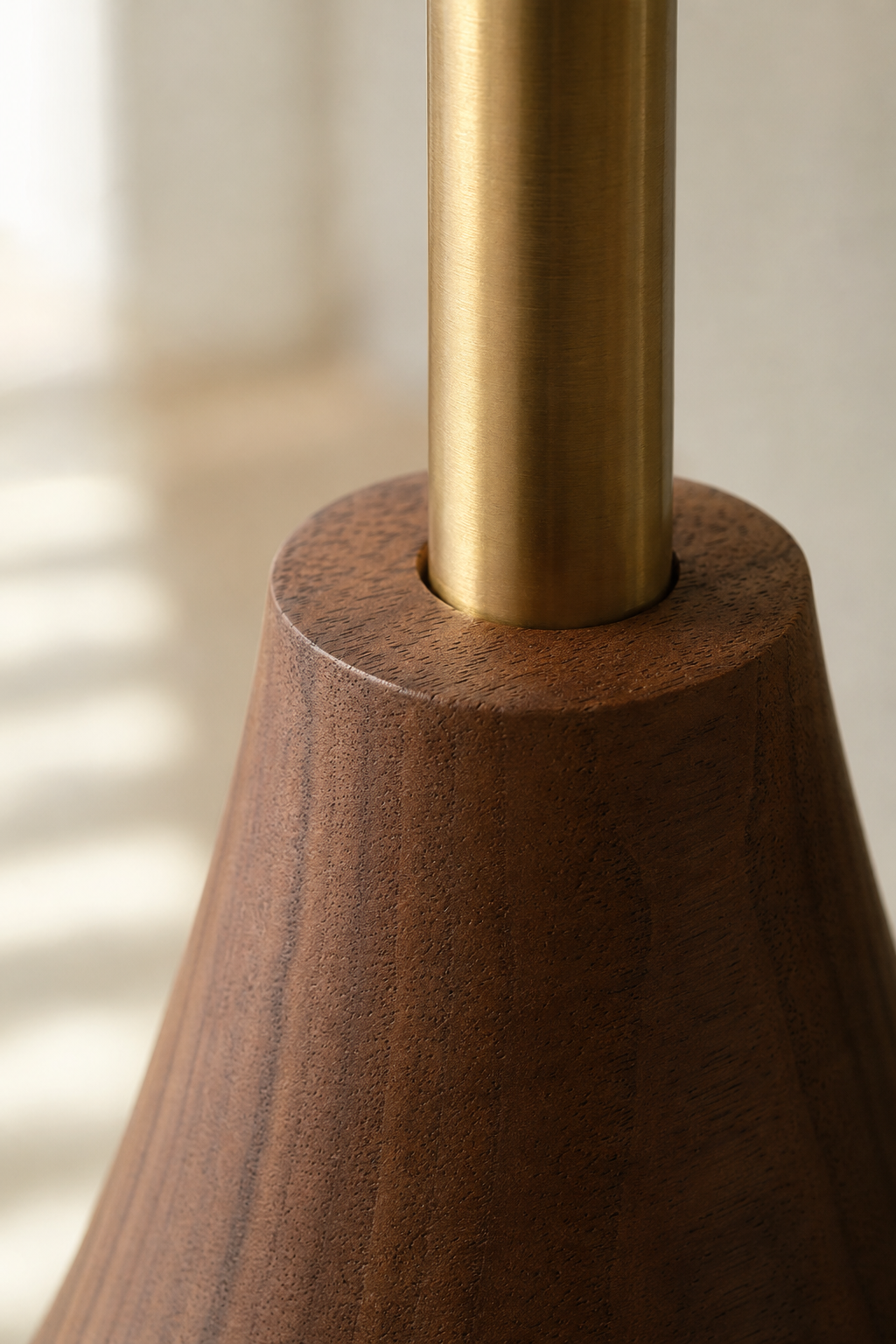
We spent a long time on the brass rod. Not on its diameter — that was resolved early, thin enough to be almost absent, present enough to be intentional — but on its finish.
Polished brass would have been too declarative. Too jewellery. The warmth was right but the reflectivity would have pulled the eye away from the wood, and the wood is the point. Brushed satin was the answer. The same warmth, the same gold tone, but quieter. It catches light without chasing it.
The rod is the same on every piece in the collection. Table lamp, floor lamp, floor lamp with integrated side table — same diameter, same finish, same proportion relative to the base it sits on. It is the thread that holds Bernard and Friends together as a family.
The prototypes of Bernard & Friends have been in our home since before the collection had a name. This was not a decision we made consciously — it was simply what happened. We made the first pieces, brought them home because the studio was not the right place to understand them, and then found that weeks became months and we had stopped thinking of them as prototypes.
What we learned from living with them is that they change. Not physically — walnut is stable, the brass does not tarnish significantly — but perceptually. The morning light does something to the grain that the evening light does not. The ribbed column beside the bed reads as shadow in the dark and as texture in the day. These are not things we designed. They are things the material does, and we feel responsible for having given the material the right form to do them in.
Bernard & Friends is not a limited edition. It is not a collectible. It is not designed to appreciate in value or to signal taste to other people.
It is designed to be bought once, to be used every day, to survive a move or two, and to still feel like the right thing in the room twenty years from now. We have made the bases from solid walnut rather than veneer because veneer does not age — it chips and peels and tells you it was never what it appeared to be. Solid walnut ages honestly. It darkens slightly, develops a patina in the places that are touched most, becomes more itself over time.