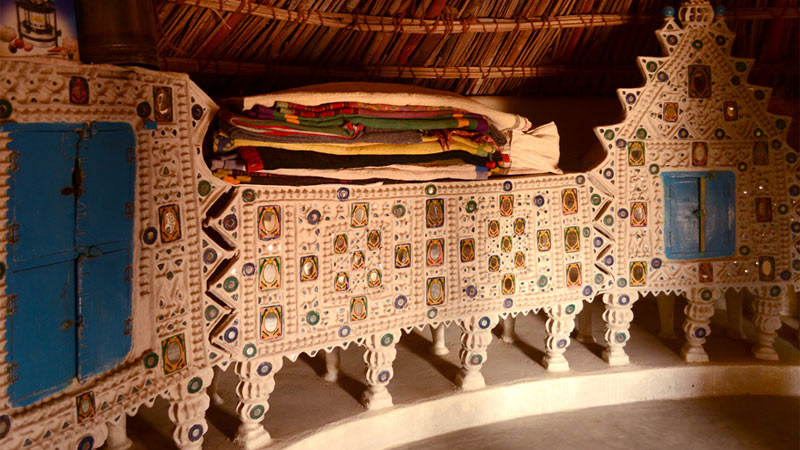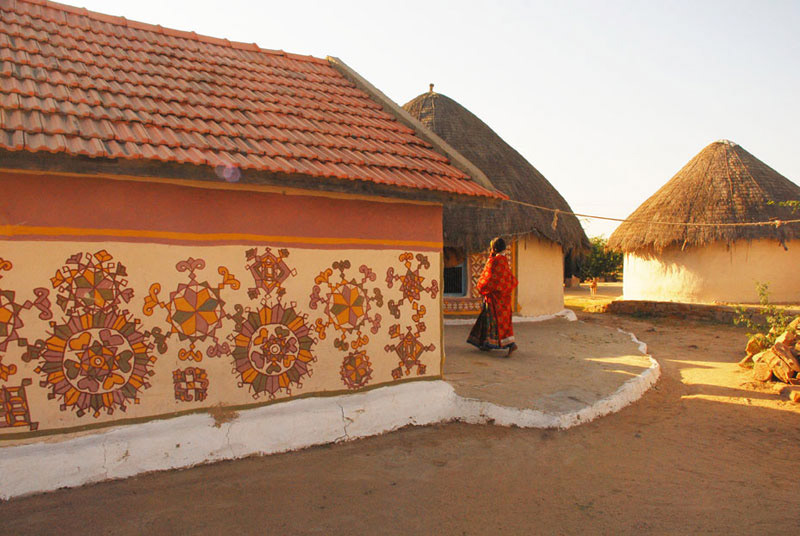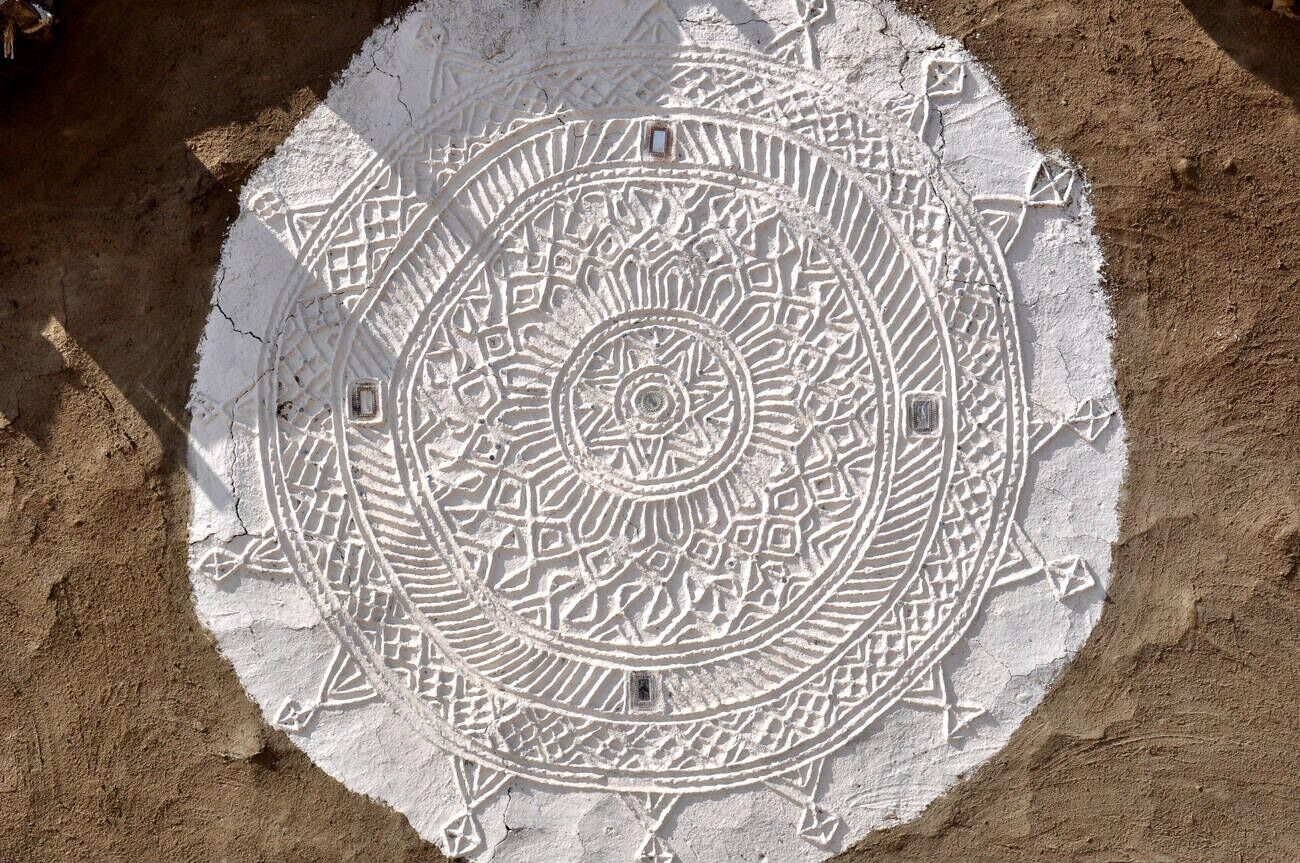

The Rabari women of Kutch have been pressing small mirrors — aabhla — into clay walls for generations. Not in rows. Not symmetrically. Intuitively, relationally, adjusting as they go. The circle is the unit. The wall is the canvas. The composition belongs to the maker.
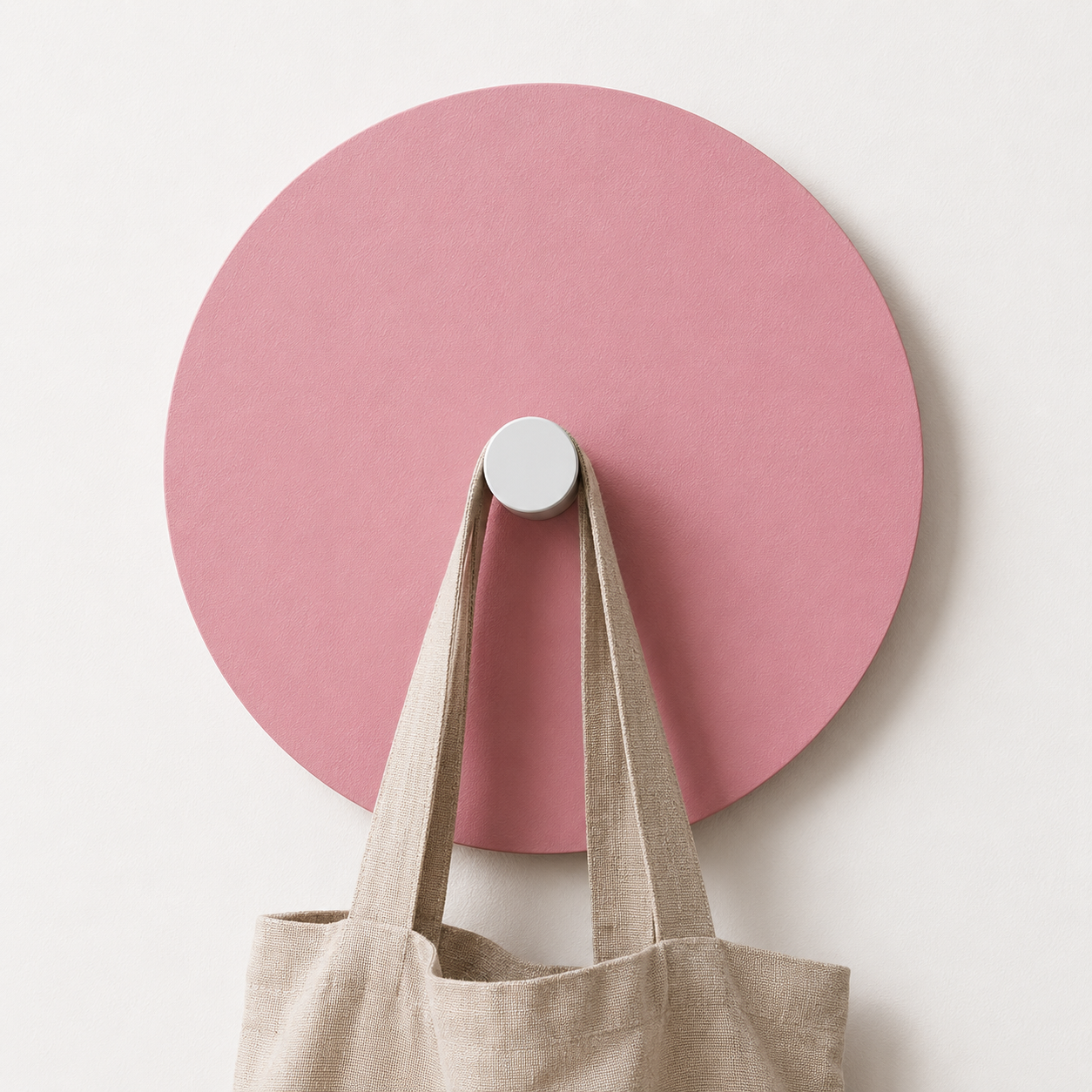
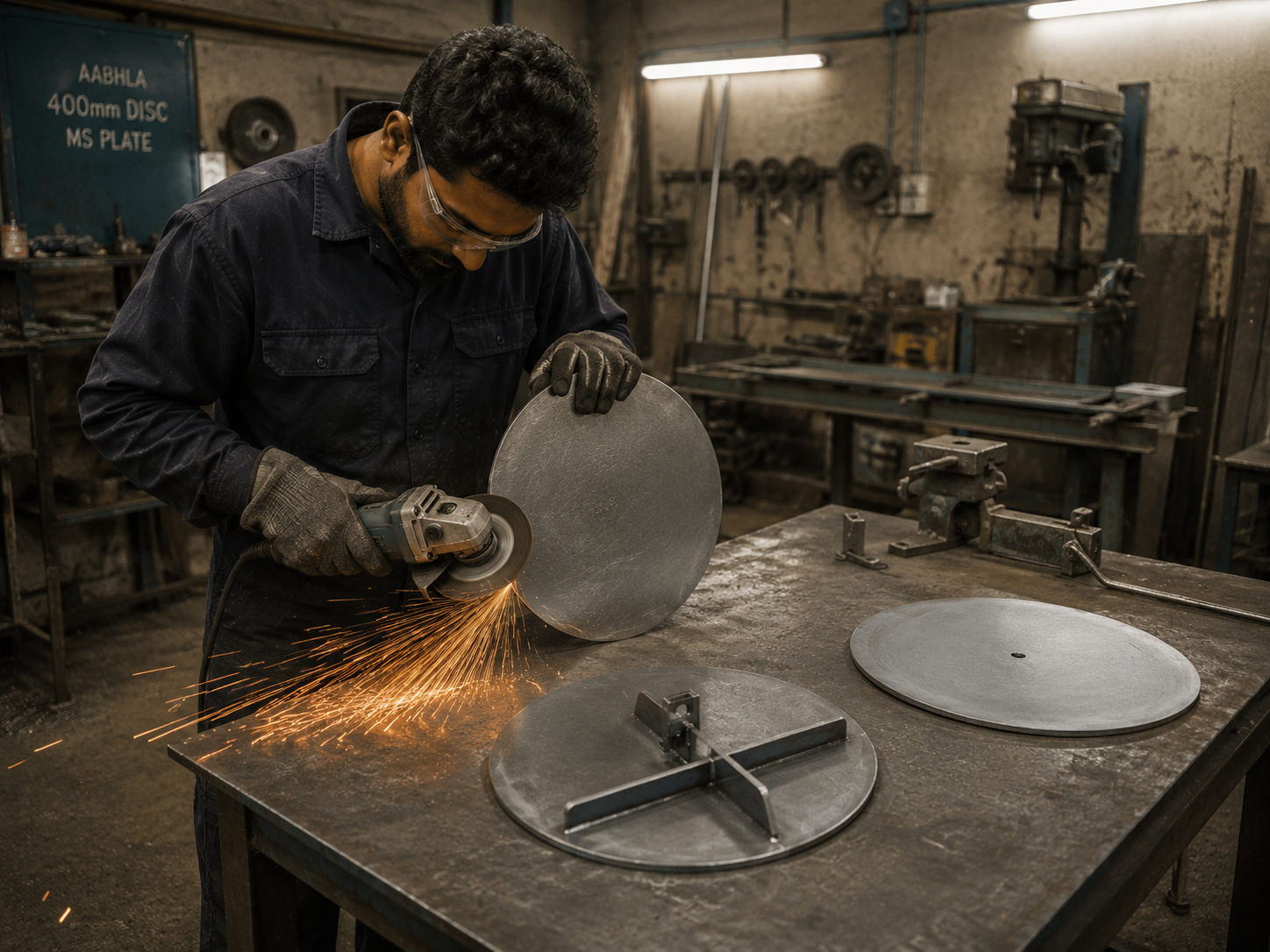
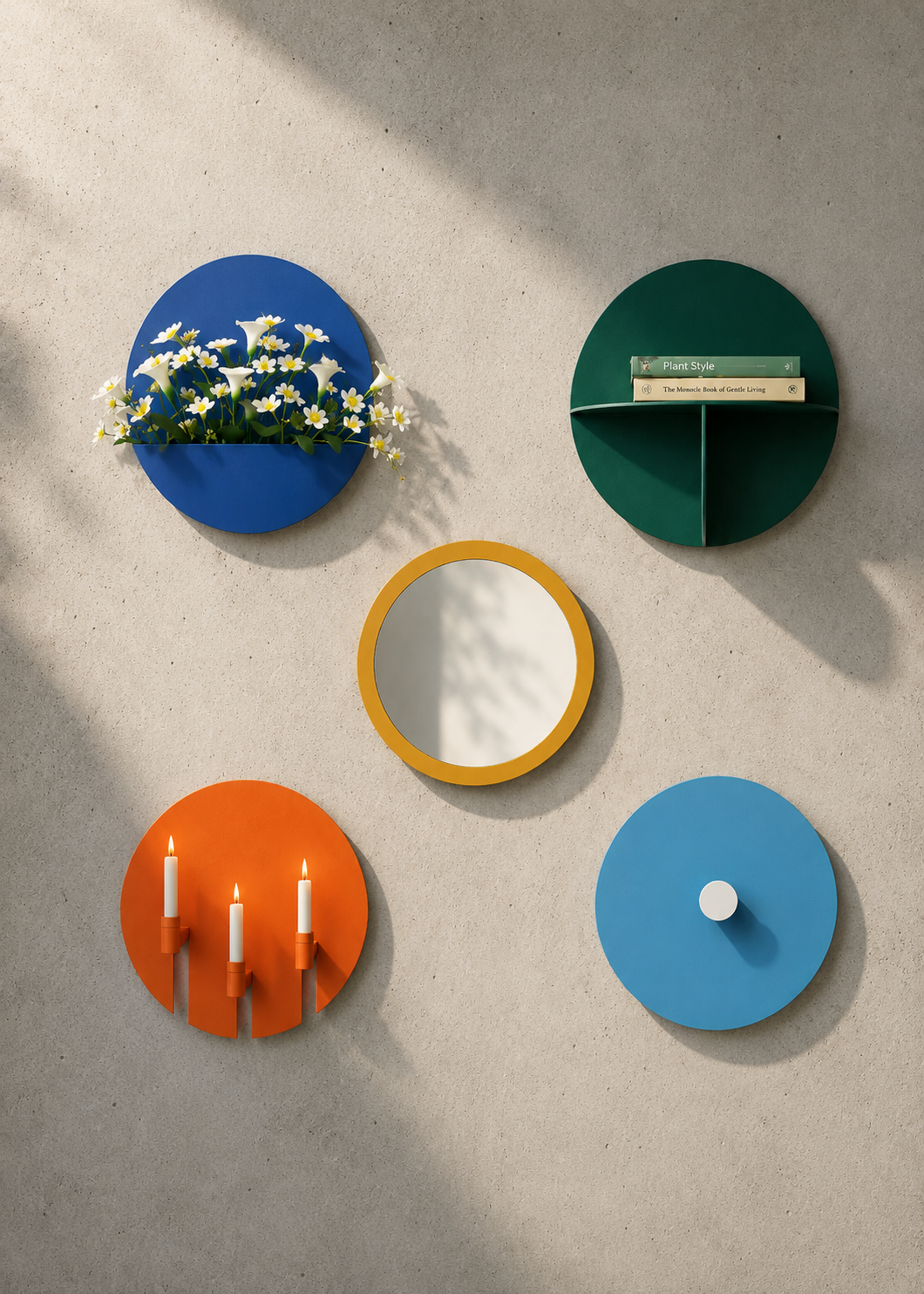
Five circular mild steel plates. Each four hundred millimetres in diameter. Each performing a different function.
The mirror. The shelf. The coat hanger. The candle stand. The flower vase.
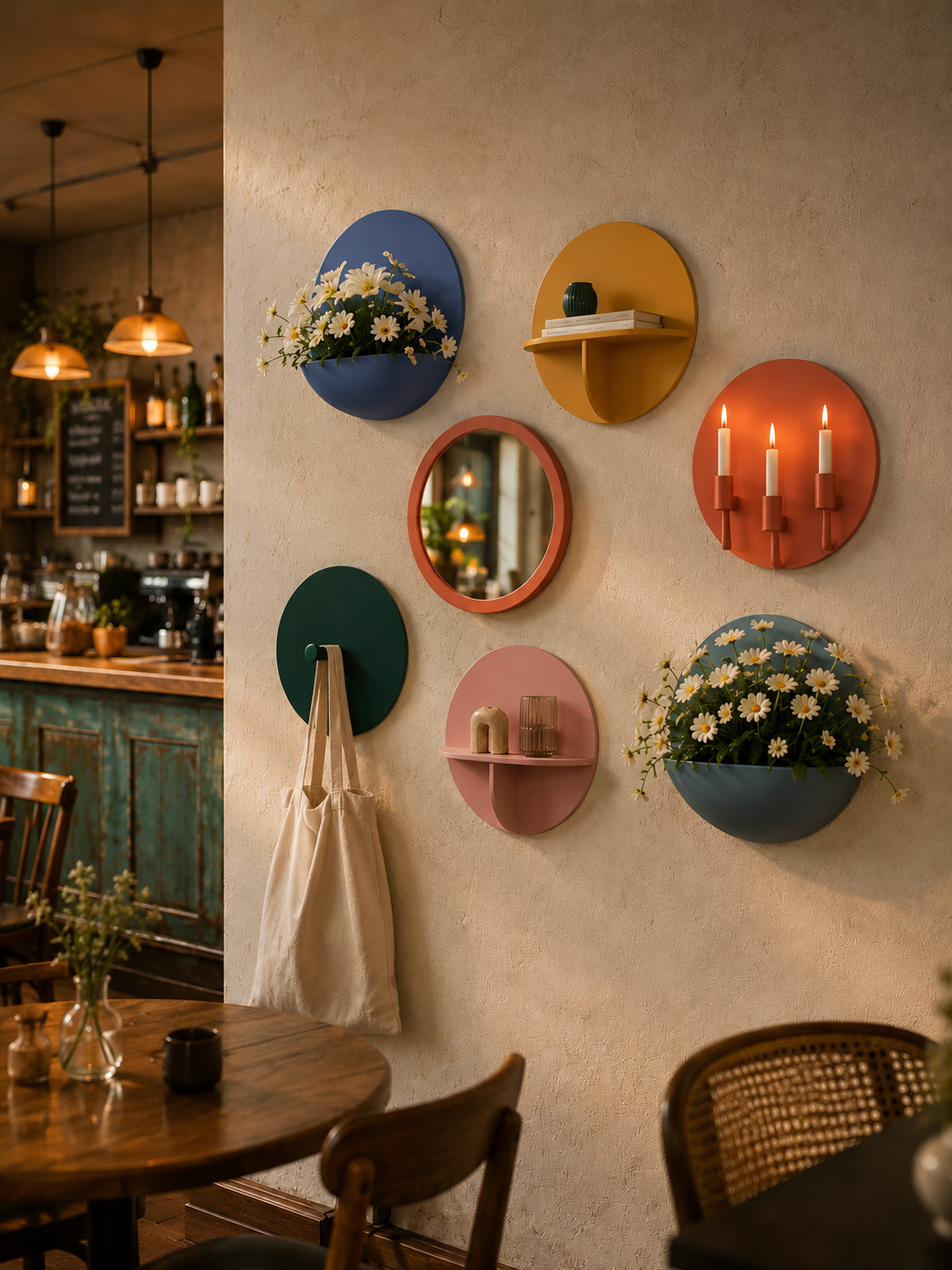
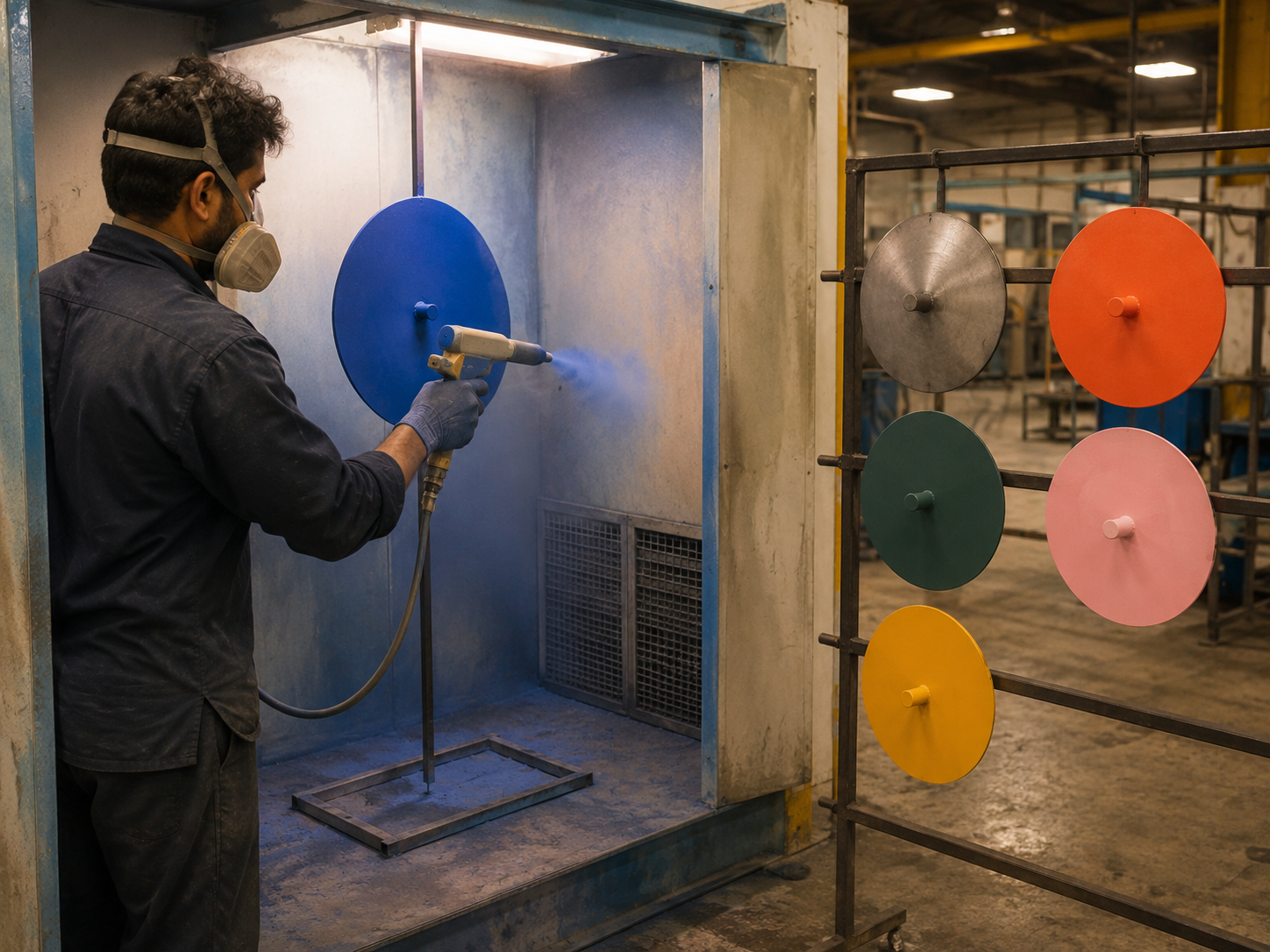
One form. Five functions. Every circle the same diameter, the same depth, the same discreet wall bracket that disappears behind the disc so the circles appear to float. The system is homogeneous at the level of the individual object so it becomes interesting only in composition — when circles of different functions and different colours find their relationship on a wall. Bold powder-coat. Deep orange, cobalt blue, forest green, warm pink, teal, mustard, charcoal. Flat matte finish, consistent and saturated, durable against fading and chipping. The colour is the personality of each circle. The arrangement of colours is the personality of the person composing them.
Mild steel. It takes powder-coat evenly, holds every function the system demands, and does not pretend to be something it is not. The colour is the story. The steel is the vehicle.
The space between two circles is as much a part of the composition as the circles themselves. A tight cluster reads differently from a loose constellation. A single orange coat hanger on an otherwise bare wall is a statement. Seven circles across the full width of a dining room is a landscape. There is no wrong composition. The shared diameter creates an underlying harmony that holds even when the arrangement is impulsive. Trust the circle.
Aabhla is not Lipan Kaam. It does not use the same materials, the same process, or the same cultural vocabulary. The Rabari women who practice that tradition produce something we cannot replicate and would not attempt to. What Aabhla takes is the compositional intelligence — the circle as a repeating unit, the wall as a canvas, the composition as something made by the person living with it. That is an idea, not a craft. We are grateful for what Kutch taught us. Aabhla is our attempt to carry that learning forward honestly.